

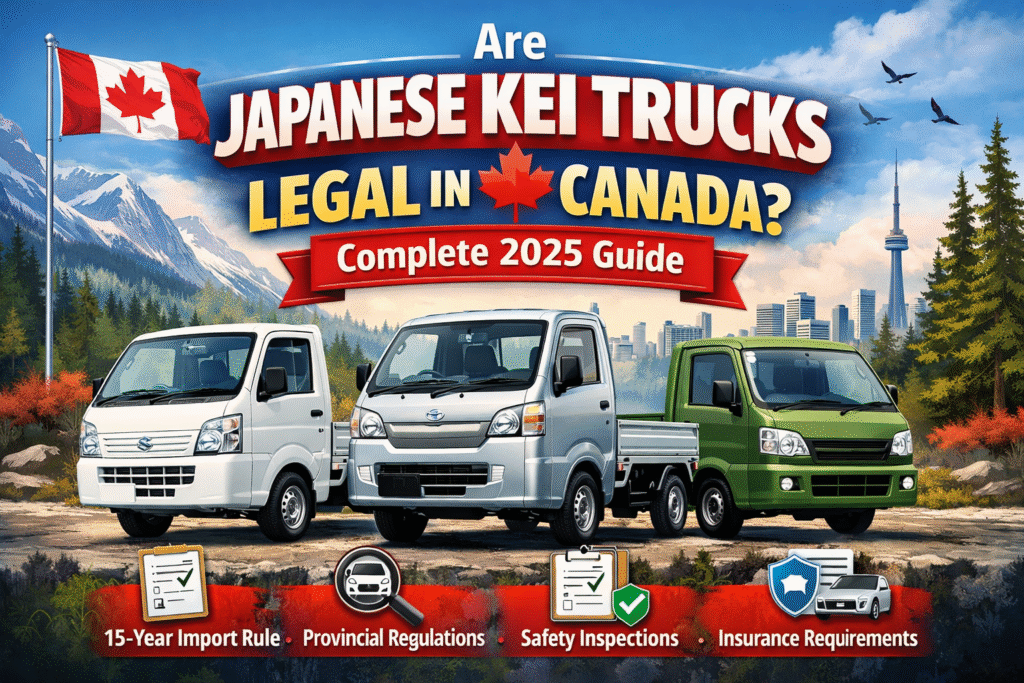
Japanese Kei trucks — tiny, economical, and highly versatile mini trucks — have become increasingly popular across Canada for farms, acreage owners, contractors, and urban adventurers. But are Japanese Kei trucks legal in Canada in 2025? In this comprehensive guide, we’ll break down the import rules, street-legal requirements, provincial differences, and the key steps Canadian buyers need to know before purchasing one.
1. What Is a Japanese Kei Truck?
Kei trucks are lightweight mini trucks originally built for the Japanese domestic market. They are known for:
- Compact size
- Fuel efficiency
- 4WD capability (on many models)
- Low operating costs
They are ideal for farming, snow plowing, rural work, and city utility use in Canada.
2. Are Kei Trucks Legal in Canada?
General Rule — YES for Import
Kei trucks can be legally imported into Canada if they meet Transport Canada’s age exemption rules. Canada allows vehicles that are 15 years or older from the month of manufacture to be imported without needing to meet strict Canada Motor Vehicle Safety Standards (CMVSS).
3. Canadian Import Eligibility (Age Rule)
15-Year Rule
- A Kei truck must be at least 15 years old (based on manufacturing month and year) to be legal to import into Canada.
- This means in 2025, trucks built in 2010 or earlier are eligible.
How Age Is Determined
Canadian Customs (CBSA) uses:
- The factory build date from the manufacturer plate or label
- The Japanese export certificate
to confirm age at entry.
4. Provincial Rules: Registration & Road Use
Import eligibility does not automatically equal street legality — each province has its own registration requirements.
Common Provincial Requirements
✔ Safety inspection — required in most provinces before registering the truck for public roads. This confirms vehicle roadworthiness and compliance with basic safety standards.
✔ Insurance — needed before registration.
✔ Taxes & duties paid — GST, PST (if applicable), and import duties must be paid at the border.
✔ Right-hand drive (RHD) — many Kei trucks from Japan are RHD, which may affect registration or insurance in some provinces.
Special Case — Quebec
In Quebec the rules are stricter:
- Often, Kei trucks must be 25 years old or more to be eligible for road registration due to provincial vehicle standards and safety policies.
This is a notable exception across Canada and buyers in Quebec should confirm local requirements before importing.
5. Street Legal Use Across Canada
Most provinces allow Kei trucks on public roads after passing provincial inspections and safety requirements, provided they meet age criteria and registration rules.
Examples from Canadian listings show Kei trucks described as “passed local inspection” and “ready to be registered and driven on Canadian roads.”
6. Safety & Compliance Considerations
While age-exempt imports bypass CMVSS at the federal level, vehicles still need to pass provincial mechanical safety standards (lights, brakes, tires, etc.) before registration.
RHD headlamps, reflectors, and other equipment may sometimes need adjustment or replacement to satisfy provincial requirements — this is typically handled during the safety inspection.
7. Costs & Fees (Import + Registration)
While price varies depending on the model and source, Canadian importers commonly report that total costs include:
- Purchase price of truck in Japan
- Shipping to Canadian port
- Duties & taxes
- Brokerage fees
- Provincial safety inspection and registration fees
These combined determine the final on-road cost of owning a Kei truck in Canada.
8. Insurance in Canada
To drive a Kei truck on public roads, insurance is mandatory, just like any other vehicle. Specialty or classic vehicle insurance may be required, especially for older models.
Insurance companies may request:
- Proof of inspection
- Import documentation
- Photos of the vehicle
9. Key Models & Popular Kei Trucks in Canada
Popular models Canadians import include:
- Honda Acty
- Suzuki Carry
- Daihatsu Hijet
- Subaru Sambar
- Mitsubishi Minicab
These models are well-known in the Japanese market and are common on Canadian roads once properly imported and registered.
10. Conclusion — Are They Legal?
✅ Yes — Japanese Kei trucks are legal to import into Canada if they meet the 15-year rule.
🚫 In Quebec and some specific cases, trucks may require 25+ years of age to be street legal.
✅ Registration and safety inspection are required in most provinces before you can drive the truck on public roads.
These vehicles offer Canadians a practical, affordable alternative utility truck — particularly suited for farms, winter chores, and work tasks — as long as legal requirements are met.